

Temporary Anchorage Devices In Los Angeles, Precision Without Headgear
Heard the words “tiny screws” and felt your stomach drop a little? You are not alone. But temporary anchorage devices, or TADs, are far less intimidating than they sound, and they can make your treatment faster, gentler, and more precise.
At Alpan Orthodontics, TADs are a tool for one thing: moving your teeth exactly where they need to go, without relying on bulky headgear or pulling healthy teeth. When they are the right choice, Dr. Alpan uses them to reach results that used to be much harder to achieve.
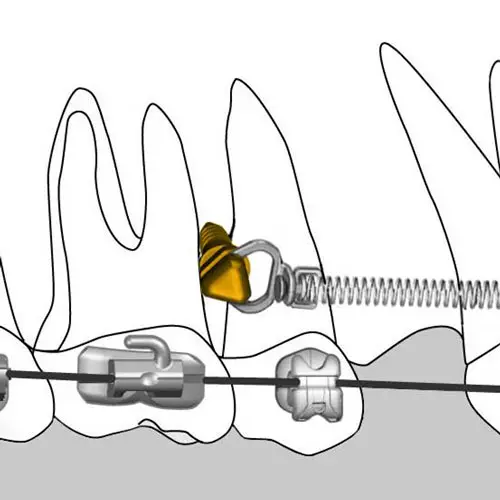
What Are TADs, Really?
Let’s clear up the mystery. A TAD is a very small anchor, about the size of a tiny earring post, that is gently placed in the gum to give your orthodontist a fixed point to work from.
Think of it like an anchor in the ground. With a steady point to push or pull against, specific teeth can be moved precisely, while the teeth you do not want to move stay put. They are temporary, so once they have done their job, they come right out.
How TADs Move Teeth More Precisely
So how do they actually help? It comes down to control.
Normally, moving one tooth can tug on its neighbors, which is not always what you want. A TAD gives your orthodontist a stable spot that does not budge, so a tooth can be guided in exactly the right direction without dragging others along. That precision can close gaps, lift or lower teeth, and correct tricky bites that would otherwise be hard to fix.

A Modern Alternative To Headgear And Extractions
Here is the part that fits how Dr. Alpan practices. In the past, some of these tough movements meant wearing headgear or pulling healthy teeth to make room.
Dr. Alpan would rather protect your natural teeth and your airway whenever he can. TADs often let him do exactly that, guiding teeth precisely without headgear that pushes them backward or extractions that shrink the arch. It is a gentler path to the same strong result, and it fits right into his whole-health approach to braces and beyond.
Why The Right Hands Matter For TADs
Here is the truth about any advanced tool: it is only as good as the person using it. Placing a TAD in exactly the right spot, at the right angle, for the right movement takes real skill and planning.
Every plan at Alpan Orthodontics is built by Dr. Alpan, who has designed more than 25,000 treatment plans and trained over 12,000 doctors around the world. So if TADs are part of your treatment, they are placed as one piece of a plan mapped by a doctor other doctors learn from, with your whole bite, jaw, and airway in mind.
What To Expect
Nervous about how it feels? That is the most common worry, and a fair one.
Placing a TAD is quick, and the area is numbed first, so most patients feel pressure more than pain. Any soreness afterward is usually mild and short-lived, similar to a normal adjustment. The TAD stays in only as long as it is needed, and removing it is even simpler than placing it.
When your treatment is complete, your results are protected with lifetime retention, so all that careful work holds for the long run.
Common Questions About Temporary Anchorage Devices
Do TADs hurt?
Most patients are surprised by how manageable it is. The area is numbed before placement, so you mainly feel pressure rather than pain, and any soreness afterward is usually mild and passes quickly. It is often compared to a routine adjustment.
What are temporary anchorage devices used for?
TADs give your orthodontist a fixed anchor point to move specific teeth precisely, without disturbing the ones that should stay put. They are used to close gaps, reposition teeth, and correct tricky bites. In many cases, they help avoid headgear or the removal of healthy teeth.
Are TADs permanent?
No, and that is where the name comes from. TADs are temporary, staying in place only as long as they are needed to guide your teeth. Once their job is done, they are removed in a quick, simple visit.
Can TADs help me avoid pulling teeth or wearing headgear?
Often, yes. Because they offer such precise control, TADs can achieve movements that once required extractions or headgear. Dr. Alpan favors this kind of gentler, tooth-preserving approach whenever it fits your case.
How much do TADs cost in Los Angeles?
It depends on your overall treatment plan, since TADs are usually one part of a larger course of care. At your consultation, the team will walk you through your options and how payment can work in plain terms. You will understand the full picture before you decide.
Curious If TADs Are Right For You?
You do not need to figure out advanced treatment on your own. A single visit with a specialist can tell you whether temporary anchorage devices fit your plan and how they help.
With offices throughout Los Angeles, from Downtown LA and Larchmont to Woodland Hills and Pasadena, a location is likely near you. Book your consultation today and get a clear plan built around your smile.