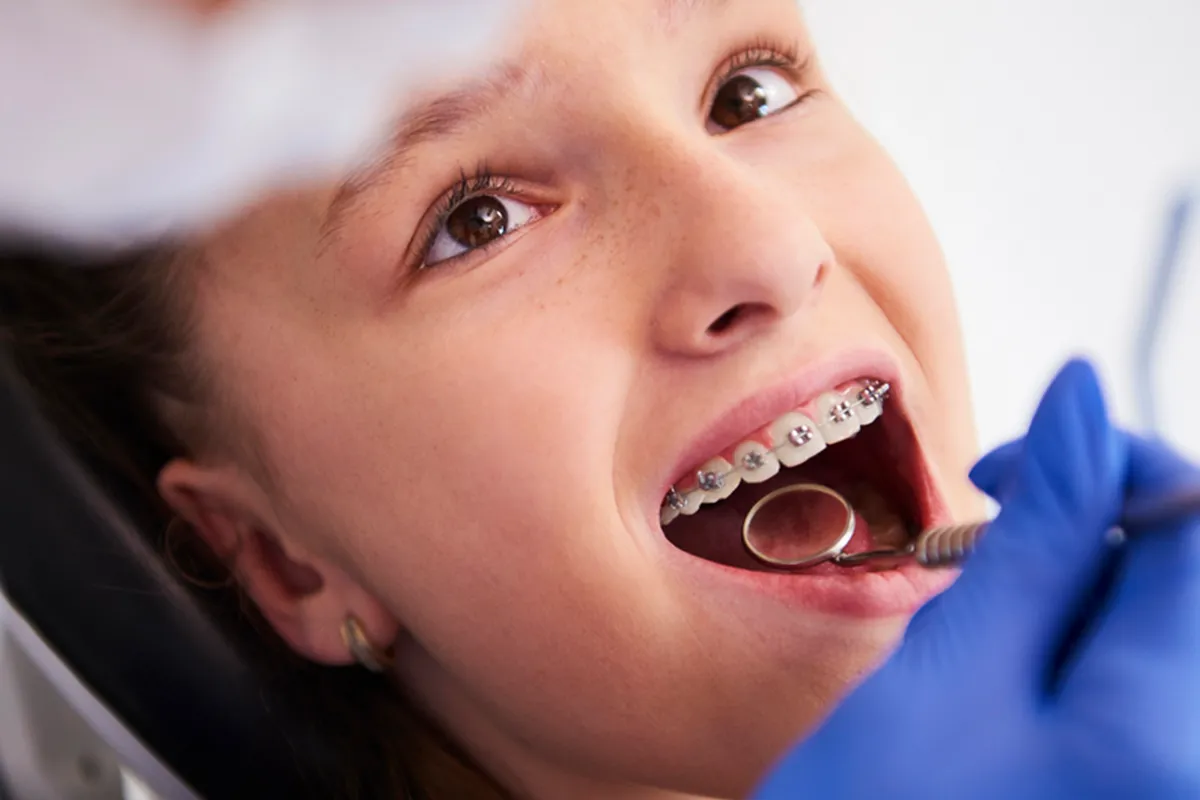
Dental plaque is always a threat, but when you wear braces, controlling the nuisance takes on a new importance. As the source of most dental health issues, plaque is created by masses of bacteria that, while native to your oral cavity, can pose a serious threat when allowed to grow out of control. Typically, a few moments spent brushing and flossing your teeth at least twice a day is your main defense against plaque. However, if you’re undergoing orthodontic treatment, then you must take special care to clean bacterial plaque from between the brackets, wires, and your teeth. Today, your Los Angeles orthodontist, Dr. David Alpan, takes a close look at why plaque is dangerous, and offers advice for maintaining effective dental hygiene while wearing braces.
Big Problems in Small Packages
Tooth decay, gum disease, chronic bad breath, and other oral health complications often result from oral bacteria’s biological processes. For instance, some mouth germs turn sugar into acid through metabolization, and the acid depletes the enamel around your teeth, leaving them vulnerable to tooth decay-causing bacteria. Other germs can incite inflammation in your gums and cause them to pull away from your teeth, leading to gum disease and possible tooth loss. When allowed to gather in force, these microbes form plaque to protect them from your mouth’s natural defenses, like saliva.

There are many considerations to straightening crooked teeth, and if you’re an older teen or an adult who requires orthodontic treatment, than many of those considerations are likely of a cosmetic nature. Crooked teeth can visibly mar your smile, but wearing metal braces to correct them may not add to your confidence within your personal and professional life. To address the aesthetic nature of malocclusion while maintaining the utmost discretion, your Century City orthodontist, Dr. David Alpan, may recommend Invisalign clear braces. By eschewing the traditional bracket-and-wire setup of conventional braces, clear braces are designed for image-conscious patients who may otherwise postpone or neglect a serious dental problem. However, discretion isn’t the only benefit to Invisalign treatment; as removable aligners, clearbraces also make good dental hygiene easier to maintain.
A Focus on Convenience
Although they’re called clear braces, Invisalign’s aligners aren’t braces in the typical sense. More accurately, they’re a series of custom-designed aligners that guide your teeth along a doctor-prescribed path of movement to their desired positions.
As a dedicated orthodontist in Los Angeles, Dr. David Alpan specializes in an interesting aspect of your teeth—their orientation, position, and contribution to your bite’s balance. Aside from remaining clean and disease-free, healthy teeth also have to be aligned properly to displace your bite’s pressure. However, maintaining your smile’s harmony is only the tip of the iceberg when it comes to your teeth’s abilities. Today, we explore a few interesting facts that you may not know about your teeth and what makes them such a formidable part of your anatomy.
Did You Know?
Your tooth is comprised of three layers: enamel (on the outside), dentin (the main structure), and pulp (inner chamber that houses the nerves and blood vessels). The enamel that protects your teeth is the strongest substance that your body produces.
While losing a healthy tooth is typically a disastrous experience for your oral health, sometimes a tooth must go for the greater good of your smile. As Dr. David Alpan explains, most preferable dental treatments should focus on preserving as much healthy tooth tissue as possible; however, if a crooked, damaged, or severely diseased tooth interferes with your good dental health, then extraction may be the only solution. Today, your Los Angeles orthodontist describes when tooth extraction is the only viable option, and how it can serve your smile’s best interests.
Only When it’s Necessary
Wisdom teeth—the last four molars to erupt in a healthy adult mouth—are usually the only teeth that can be extracted without negatively affecting your oral health and function. In fact, impacted wisdom teeth often cause crowding, push existing teeth out of alignment, and disturb your smile’s delicate symmetry. Similarly, a severely crooked, diseased, or damaged tooth may interfere with your orthodontic treatment and require removal to make room for other teeth.